OD&D Wilderness Adventuring

“Exploratory adventures are likely to be the most exciting, and their incorporation into the campaign is most desirable.” 

  • Dungeons & Dragons Book III: The Underworld & Wilderness Adventures by Gary Gygax & Dave Arneson

Unbeknownst to my sons, our irregular D&D game has backslid from a hybrid of Basic Fantasy and Rules Cyclopedia to Swords & Wizardry and is now entering its final form of straight OD&D. They don’t care, but I do. As you work backwards the game becomes more… gamey? As we finish up the Keep on the Borderlands in the next couple months I am getting ready to shift gears into wilderness exploration. I have been researching the rules to make sure I am ready for that shift and putting together my rules document. Below is the culmination of that effort, shared in case it is of use at another table.

How big is a hex?

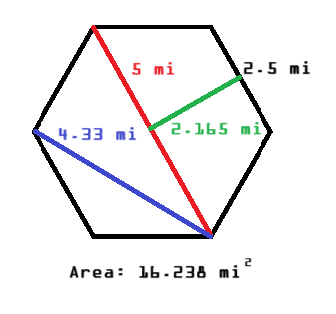
I have read the merits of the 6 mile hex, the 3 mile hex, the 30 mile hex, the point crawl, and everything in between. It all makes sense. But OD&D does explicitly state how big a hex is on page 17 of book III: “Scale: Assume the greatest distance across a hex is about 5 miles.” The long diagonal of a hex would be the greatest distance, putting the area of a hex at about 16 sq. miles.
 

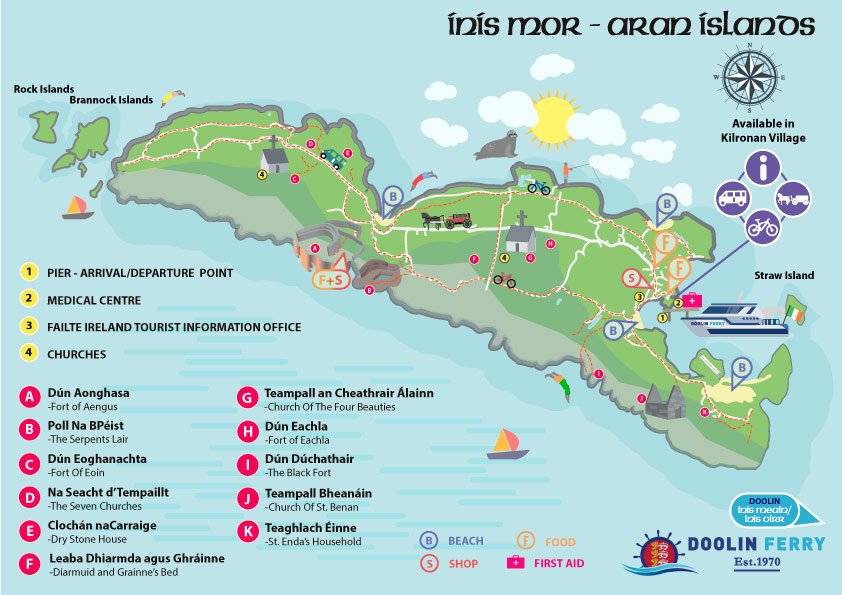
What is 16 square miles? It’s about 1.3x as big as the Island of Inis Mor which is ~12 square miles.


How much cool stuff is in just 12 square miles?

How about the Fort of Aengus, the Serpent’s Lair, the Fort of Eoin, the Seven Churches, the Dry Stone House, Diarmuid & Grainne’s Bed, the Church of the Four Beauties, the Fort of Eachia, the Black Fort, the Church of St. Benan, and St. Enda’s Household? The real Inis Mor sounds like years of adventure.

How does movement work?

In OD&D movement is measured in discreet hexes per day. It borrows heavily from the board game OUTDOOR SURVIVAL with subtle tweaks here and there.

First we have movement rates for people, vehicles, and mounts. A large portion of this list (9/19 entries!) is dominated by flying mounts and vehicles which is fascinating, but for now I am focused on the terrestrial options (I’ll be ignoring boats for the time being as well). Movement is handled as discrete units, points if you will, which are spent to enter new hexes. Despite there being entries for draft, heavy, medium, and light horses we only need to concern ourselves with the draft horse because it clearly states in the rules: “Horsed parties will travel at the speed of a draft Horse.”

Man on Foot: 3 movement points (~15 miles/day)

Wagon/Cart: 4 movement points (~20 miles/day)

Draft Horse: 5 movement points(~25 miles/day)

For a fully laden adventuring party this feels pretty good I don’t have any reason to quibble with it.

To enter a hex the party spends its movement points. Different terrain costs different amounts of movement points. These are taken directly from OUTDOOR SURVIVAL except for a few adjustments which will be noted below. There is no such thing as partial movement through a hex, the rules sidestep this oft cited complication by explicitly stating, “Person counters may move over dif­ferent types of terrain as long as they have sufficient movement points to enter that particular type of terrain. Thus, a Person counter with a movement factor of 2 could not move at all if surrounded by mountain or swamp hexes.”

This also feels reasonable. The party emerges from the forest, the sun starting its descent for the day, and before them the mountains rise up where the forest ends. They make camp early, preparing themselves for the difficult trek ahead of them in the morning.

Based on the rules listed in OUTDOOR SURVIVAL and DUNGEONS & DRAGONS BOOK III, the terrain adjustments are as follows:


*Every 6 days of travel requires 1 day of rest. When resting in the wilderness encounters are checked 2x per day instead of just once.

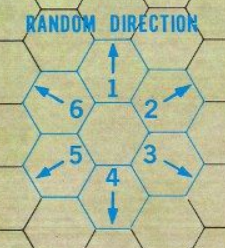
Lost: A lost party must move in the direction indicated by the die roll (1–6, as shown in the OUTDOOR SURVIVAL rules and on that board) and may make only one direction change from that direction. When exploring the referee should indicate which direction the party is lost in. The direction indicated on the OUTDOOR SURVIVAL board is shown.


Evasion and Pursuit

This is the same evasion table presented in Book III but has been turned into a d20 roll over save instead of a percentile roll.

  • Woods lowers evasion target number by 5 (+25% chance)
  • Surprise by party doubles evasion chance (halve save number)
  • Surprise by monster negates evasion chance, 19 in woods (10%)
  • Party twice as fast as monsters lower target number by 5 (+25%)
  • Monsters twice as fast as party raise target number by 5 (-25%)

Example: Based on the rules as written a party of 8 adventurers comes upon 2d10 [11] centaurs in the woods. Since their party number is 4-9 and the centaurs 26%-60% of their possible #, the base chance to evade is 11 (50%) modified by the woods (11-5=6) for a 75% chance.

Evasion & Pursuit Procedure

If the party is unable to evade monsters, they may flee and a pursuit begins. They roll a die as if lost and move in a straight line in that direction for their full movement. If the monster is faster, or If they are unable to complete that movement (due to terrain) there is a 10-in-20 chance that the monster catches them. If the monster does not catch them, they may again roll to evade. If successful the pursuit has ended, if failed they again roll and begin fleeing in a random direction for their full movement. This procedure continues until they successfully evade, they are caught, or the monsters give up pursuit.


From the rules: “For each hex moved in pursuit, a party must spend one-half day resting (remember, a day equals one turn). During a day at rest two dice are thrown for determining if wandering monsters are encountered, rather than but one.”

Conclusion

These rules are definitely board gamey, but they also add an element of randomness to wilderness exploration - especially by bringing in the movement rules (randomly determined direction) from being lost and pursuit. I'm excited to see how that operates in play, pushing the party in unexpected directions and toward unexpected challenges.

Up next: Can we adapt the resource management rules from OUTDOOR SURVIVAL into our OD&D game? I think we can...


Keep on the Borderlands Play Report: Sessions 2 & 3

 I got a new job and had been doing a lot of traveling for training so my home game with my kids got pushed to the backburner. This past weekend we were finally able to pick it back up with two solid sessions.

To catch everyone up: Snoh (Magic User 1), Boulder (Fighter 1 - formally named Rokan), Grignak (Thief 1), Hortus (Cleric 1), and Keld (Dwarf 1) had enlisted the help of the jovial priest, Malros, in the keep to launch an attack on the caves (despite the warnings of the Curate). Predictably, Malros betrayed them and it was only a lucky hold person scroll that kept them alive and they were able to drag Malros back to the keep and turn him over to the Castellan who threw him in prison. They looted his apartment and were able to rent it from the jeweler (who I decided was also a landlord).

Returning to the caves they found that the hobgoblins and goblins had brought in wolves and dire wolves to bolster their defenses because the goblin ranks had been decimated. They ended up in a pitched battle and were able to hold the stairwell in room 17, beset by hobgoblins from upper levels and the remaining goblins from the east. The goblin king, already out of favor with the hobgoblins due to his previous losses, died in the battle (there was a cool moment where Snoh tried to use Charm Person on the Goblin King but it unfortunately failed). The hobgoblins pulled back from the stairs to regroup and the party fled east through the caves to get some space between them and the hobgoblins.

After looting the goblin king’s room they used the secret door to the ogre cave to lay low until they could quietly creep away from the ravine and head back to the Keep. On the way they were beset by 8 bandits who tried to shake them down for a 60 gold toll (10 gp per person). After 1 bandit lost his life the rest agreed to let the party pass.

Back at the Keep, Snoh and Boulder decided to visit Malros in prison. Their plan was to press him for information. Malros told them that there was a bloodstone gem set in the mouth of a snake, a pendant, that his mother had given him and he wanted it back if he was to die. In return he would tell them everything he knew about the caves.

They had found the bloodstone gem among his things and secreted it into the prison. Malros took it and told them that there was an evil temple in the upper levels of the caves. He claimed that if they could secure some small comforts he may even be able to make them a map.

The two heroes went back to the Castellan to see what they could bargain for on Malros behalf, but the Castellan informed them that it was impossible and that the evil priest was to be hanged. They also learned that he was the follower of a vile snake cult and at that moment realized what they had given him (a holy symbol). They confessed their deed and rushed off along with the guard to the prison to see the damage they had done.

Malros, upon the arrival of the guard along with Snoh and Boulder, whispered something to a crow outside his prison window and it flew off (speak with animals). He smiled and surrendered the holy symbol. Snoh and Boulder were thrown into the cell with Malros for the night until the Castellan decided what their punishment should be and Malros execution was moved up to the next day.

Snoh and Boulder bribed a guard (200 gold and a charisma check vs. morale) to summon their retainer Grignak the thief. Grignak attempted to pickpocket a guard for his keys (literally rolled a 100), was caught, and was thrown into a cell adjacent to them.

That night (1am) there was a commotion in the Keep as orc archers were shooting at the ramparts. Thinking that they might be under siege the guard mobilized leaving just 2 guards in the prison. A stranger slipped a staff through the bars of the prison window and Malros convinced Snoh and Boulder to attack him.

The two remaining guards opened the cell door to break up the fight and Malros used a Staff of Snakes to kill the first guard while Snoh and Boulder attacked the second. Malros finished off the second guard and turned to escape, but realizing what they had effectively done, Snoh and Boulder picked up the guard’s swords and attacked Malros. Snoh was knocked out quickly and Boulder was constricted by the Staff of Snakes. However, a random encounter check (2) brought two more guards who blocked Malros escape. Another random encounter check later (another 2) and three more guards showed up. Three guards were killed, but so was Malros. Grignak, in the adjacent cell, testified that Malros had planned the entire escape and that Snoh and Boulder had tried to stop him and save the guard’s lives. The partial lie was successful and the “heroes” brought once more before the Castellan who explained all the events of the night appeared to have been a ruse for Malros’ escape.

The Staff of Snakes was given to the Curate Borus who was going to perform a ritual that night to destroy it. Once again, greed got the better of Snoh and Boulder who decided they needed to get the staff for themselves. Using a potion of invisibility (found in the ogre cave in the first session), Grignak sneaked into the chapel while Snoh and Borus loudly created a scene in the street at 4am claiming that they needed entry because the staff was going to be stolen. The guard showed up, thoroughly annoyed with this duo by now, and threatened to put them back in jail for disturbing the peace and began escorting them back to their apartment.

Inside the chapel, Grignak successfully sneaked to the alter (invisible) while the curate prayed before the staff to destroy it in a holy ritual. However, he failed another pickpocket check and the curate Borus rose in shock as the staff seemingly floated off the altar. Grignak ran and the curate cast detect magic, causing him to glow.

Initiative check. If they won Grignak would make it out of chapel and out of range of the curate’s detect magic. If they failed, the curate had a hold person with Grignak’s name on it. They won (4 vs. 2).

Grignak disappeared into the dark of the early morning and the curate ran out into the streets yelling that the agents of the Snake Cult had stolen the staff. The guards, still with Snoh and Boulder (giving them the perfect alibi) rushed back to the chapel upon hearing the curate's yells.

The next morning the Castellan summoned them once again, explaining that dark powers in the cave were stronger than he expected and evidently even within the walls of the keep.  He doubled the reward promised to destroy the evil altar in the Caves of Chaos.

They tested my improv skills during those sessions, but it was a good time. It turned into a very Pirates of the Caribbean plotline where they continued to fail forward in spite of their own bad decision making. Kids, even more than normal D&D players, are psychopaths.


Expanded Spells for Shadowdark

I like my players to find spells (they don't get to just pick every level) and I like to have a lot of spells. Most, but not all, have b...